

F U T U R E H I S T O R Y
歌舞伎舞踊・女形の〈系譜〉と〈型〉
LINEAGE AND FORM OF ONNAGATA
PAST|1753|2026|BEYOND
Curated by RANSHOU
About RANSHOU
RANSHOUは、藤間蘭翔が主宰する機関として、歌舞伎舞踊と女形を基盤に、舞踊、振付、演出、舞台プロデュース、映像制作、アーカイヴ、歴史研究を横断するプロジェクトを展開しています。アーカイブ/歴史研究の非営利部門・RANSHOU Archives & Collectionは、Google Arts & Cultureのパートナーとして、その所蔵する作品や成果の一部を公開しています。
RANSHOU is an independent art organization led by Ranshou Fujima. Rooted in kabuki-buyō and onnagata, it undertakes cross-disciplinary projects spanning dance, choreography, direction, stage production, film and video, archival practice, and historical research. RANSHOU Archives & Collection, its nonprofit division for archives and historical research, is a partner of Google Arts & Culture and presents selected works and research from its collection online.
藤間蘭翔メッセージ
私は古典、歌舞伎舞踊、とりわけ女形を学び、踊ってきました。
美しいと感じる一方で、一般家庭に生まれた私にとって、女形は遠い憧れの存在でした。だからこそ、その「美しさ」の正体を知りたいという思いが、より強くなっていったのかもしれません。
4歳から踊り始め、小学5年生のときにはすでに、女形の演目に惹かれていました。当時はその理由をうまく言葉にできませんでしたが、女形の役の奥にある、人の情念や悲しみ、儚さや報われなさといった想いまでもが、美しいものとして感じられる、光のようでした。
幼い頃から、自分の中に矛盾する感情が存在していることを認識していました。怒りと優しさ、希望を持ったり諦めたり、強さと脆さ、自立したい気持ちと誰かを求める気持ち。誰にも見せられず、言葉にもできなかった感情。そうした矛盾や揺らぎを抱えたままの私にとって、女形は、それらをそのまま受け入れ、寄り添い、美へと昇華してくれるものだったのです。
私は、そういう女形を美しく踊りたい。
なぜ人は美しいと感じるのか。
なぜ人は、心が揺れ動き、涙するのか。
なぜ同じ演目でも、そう感じない時があるのか。
人から人へ受け継がれてきたとされる女形の「型」とは何なのか。
古典とは何か。
芸術とは何か。
今日まで、ずっと問い続けています。
その過程で、当時の役者絵や古典籍、舞台資料を集めるようになりました。誰かに見せるためではなく、私自身の問いを考えるために必要だったものです。
古典とは、単なる古いものではなく、後の時代の人々によって選ばれ、淘汰され、伝わってきたものです。女形の型もまた、18世紀以降、300年に及ぶ歴史があります。
私が美しいと感じるものの正体は、そうした人から人へ受け継がれてきた時代ごとの感性や空気、人々の感情、身体の記憶といったものが折り重なり濾過された、結晶なのではないかと思っています。型を通して、その長い時間〈結晶〉に触れることができる。それが、私にとっての美しさです。
今回ならぶ作品や資料は、長い時間をくぐり抜けてきたものばかりです。
日常が驚くほどの速さで目まぐるしく変化する中で、その速度に戸惑うとき、私は、古典に流れている深く長い時間に助けられることがあります。
古典は、過去のものではなく、今も生きている。
本展は、私が踊りながら問い続けてきた「芸術とは何か」「古典とは何か」という旅の途中を公開する試みでもあります。そして同時に、「2026年の古典」の一つの姿でもあります。
本展が、古典と今を生きる私たちとが出会い、静かに響き合う場となれば幸いです。
Message from Ranshou Fujima
I have studied and performed classical Japanese dance, particularly kabuki-buyō, and especially onnagata.
While I found onnagata profoundly beautiful, for someone like me, not born into a kabuki family, it also remained a distant object of longing. Perhaps it was precisely because of that distance that my desire to understand the true nature of its beauty grew ever stronger.
I began dancing at the age of four, and by the fifth grade I was already drawn to onnagata roles. At the time, I could not yet explain why. But within those roles, I sensed something like light: even human passion, sorrow, fragility, and unfulfilled longing could themselves be felt as beautiful.
From an early age, I was aware that contradictory emotions coexisted within me—anger and tenderness, hope and resignation, strength and vulnerability, the wish for independence and the longing for another. These were feelings I could show to no one, feelings I could not put into words. For me, carrying such contradictions and uncertainties within myself, onnagata was something that accepted them as they were, stayed close to them, and transformed them into beauty.
I aspire to dance that kind of onnagata.
Why do we perceive something as beautiful? Why are we shaken, sometimes even moved to tears? Why is it that the same work does not always move us in the same way? What is the kata of onnagata said to have been passed down from person to person? What is a classic? What is art?
These are questions I have continued to ask to this day.
In the course of that inquiry, I began collecting actor prints, classical texts, and stage materials from earlier periods. I did not gather them in order to show them to anyone else. They were things I needed in order to think through my own questions. A classic is not simply something old. It is something that has been selected, refined, and transmitted by later generations. The kata of onnagata, too, carry a history of three hundred years, stretching back to the eighteenth century.
I have come to feel that the beauty I perceive may be a kind of crystallization: the sensibilities and atmosphere of each era, human emotions, and memories held in the body, layered upon one another and filtered through transmission from person to person.
Through kata, one is able to touch that long span of time—that crystallization. For me, that is beauty.
The works and materials presented here have all passed through long stretches of time. In an age when daily life changes at a bewildering speed, there are moments when I feel unsettled by that pace. At such times, I find myself sustained by the deep and enduring time that flows through the classics.
The classics do not belong only to the past. They are still alive now.
This exhibition is also an attempt to share one point along my ongoing journey of asking, through dance: What is art? What is a classic? At the same time, it offers one possible form of “the classic in 2026.”
I hope this exhibition may become a place where the classics and those of us living in the present may encounter one another and resonate quietly together.
RANSHOU Archives & Collection
RANSHOU Archives & Collection は、浮世絵をはじめ、歌舞伎舞踊ーとりわけ女形ーに関する資料を中心とし、18世紀の歌舞伎舞踊の成立及びそれ以降の展開について、歴史の一面を辿ることができます。藤間蘭翔が10代の頃 から収集してきた資料群を核にして構成されています。
Google Arts & Cultureのパートナー機関として、その一部をGoogle Arts & Culture上で公開しています。
Google Arts & Culture - RANSHOU Archives & Collection
当初は「コレクション」として意図的に収集されたものではなく、学習、心の埋め合わせ、居場所の確認といった私 的な動機から自然に形成されてきたものです。そこには、女性として一般家庭に生まれ育ちながらも、本来の歌舞伎と 同一又は類似の技法や演目を修練してきたという背景があります。幼少期から30代前半に至るまで、師・藤間蘭景と 藤田洋(演劇舞踊史家・新国立劇場 演劇部門 初代芸術監督)の導きのもと、歴史的に重要な古典を学び踊り続けてき たことで、収集物の多くも、次第に、歌舞伎舞踊の歴史そのものを表すようになりました。
一方で、四歳より古典舞踊を学び始めた蘭翔は、「小さい頃から、古典は『過去』ではなく、同時代の文学・アニ メ・漫画などと一緒だった」と語ります。その言葉のとおり、コレクションには、ここに掲出されるもの以外にも、漫画・アニメ、映画、現代美術、西欧芸術に関わる作品や資料が多数含まれています。時代やジャンルなどに捉われない そのコレクションの在り方は、「時代を超える美とは?」という命題を探究する藤間蘭翔そのものを体現する性格を有しています。 また、その命題の探究と共に、約300年にわたって男性的身体を前提に発展してきた「女形」につい て、現代に生きる女性として表現する意味や役割について考察するプロジェクト『藤間蘭翔の現代女形考』において も、これらの作品は重要な位置を占めています。
浮世絵版画が含まれる性質柄、より良い状態のものを国内外の美術館等が保有していることが一部確認できますが、 長年の実践を通して、自然にキュレーションされた作品群であり、ある意味では「生きている作品」です。研究者、日 本の芸術、殊、舞踊に興味を持たれた方にとって、何らかの糸口、更には過去や未来への扉となることを願い、 公開されたものです。
The RANSHOU Archives & Collection focuses on ukiyo-e and materials related to classical kabuki dance (kabuki-buyō)—especially the art of the onnagata. It offers a distinctive lens through which to trace the emergence and development of kabuki-buyō from the eighteenth century onward. At its core is a body of materials assembled by Ranshou Fujima, the director of the Archives and an active dancer specializing in kabuki-buyō. Her practice is multidisciplinary, spanning performance, choreography, directing, stage production, and film.
A portion of the collection is made publicly accessible online as a partner institution of Google Arts & Culture.
Google Arts & Culture - RANSHOU Archives & Collection
This collection did not begin as an art collection. Rather, it arose from personal motives—study, an emotional anchor, and a sense of belonging—shaped by Ranshou’s position as a woman outside a hereditary kabuki lineage, yet trained in the same classical techniques as male actors. Ranshou began studying classical dance at age four, commencing formal training under the grandmaster Fujima Rankei at age nine. She refined her focus further under the guidance of kabuki scholar and former Artistic Director of the Drama Department at the New National Theatre, Tokyo, Hiroshi Fujita and Rankei. Consequently, the holdings gradually converged on materials linked to the pieces she has studied and performed, as well as the broader history of kabuki-buyō.
At the same time, Ranshou recalls: “The classics were never ‘the past’; they stood alongside contemporary literature, anime, and manga.” In keeping with that sensibility, the collection also includes—beyond the works displayed here—materials related to manga and anime, film, contemporary art, and Western art. Freed from the constraints of genre or historical period, the collection embodies the core question of her artistic practice: What constitutes enduring beauty across time?
These materials also play a central role in Ranshou’s ongoing project, “Contemporary Onnagata.” This initiative addresses the core question directly: What purpose and role can she claim as a performer today, and how should the meaning of her practice be situated within a three-century tradition shaped by the male physical form?
While certain similar ukiyo-e prints in pristine condition are available in other collections both in Japan and abroad, the unique significance of this collection lies elsewhere. As outlined above, it coalesced organically over decades of embodied practice as a dancer and choreographer; in that sense, the individual works here are truly "alive in the present." It is introduced in the hope that it will offer scholars and those interested in Japanese arts—especially performance—meaningful points of entry and connection, serving as a gateway to both the past and the future.
代表プロフィール
藤間蘭翔 | Ranshou Fujima
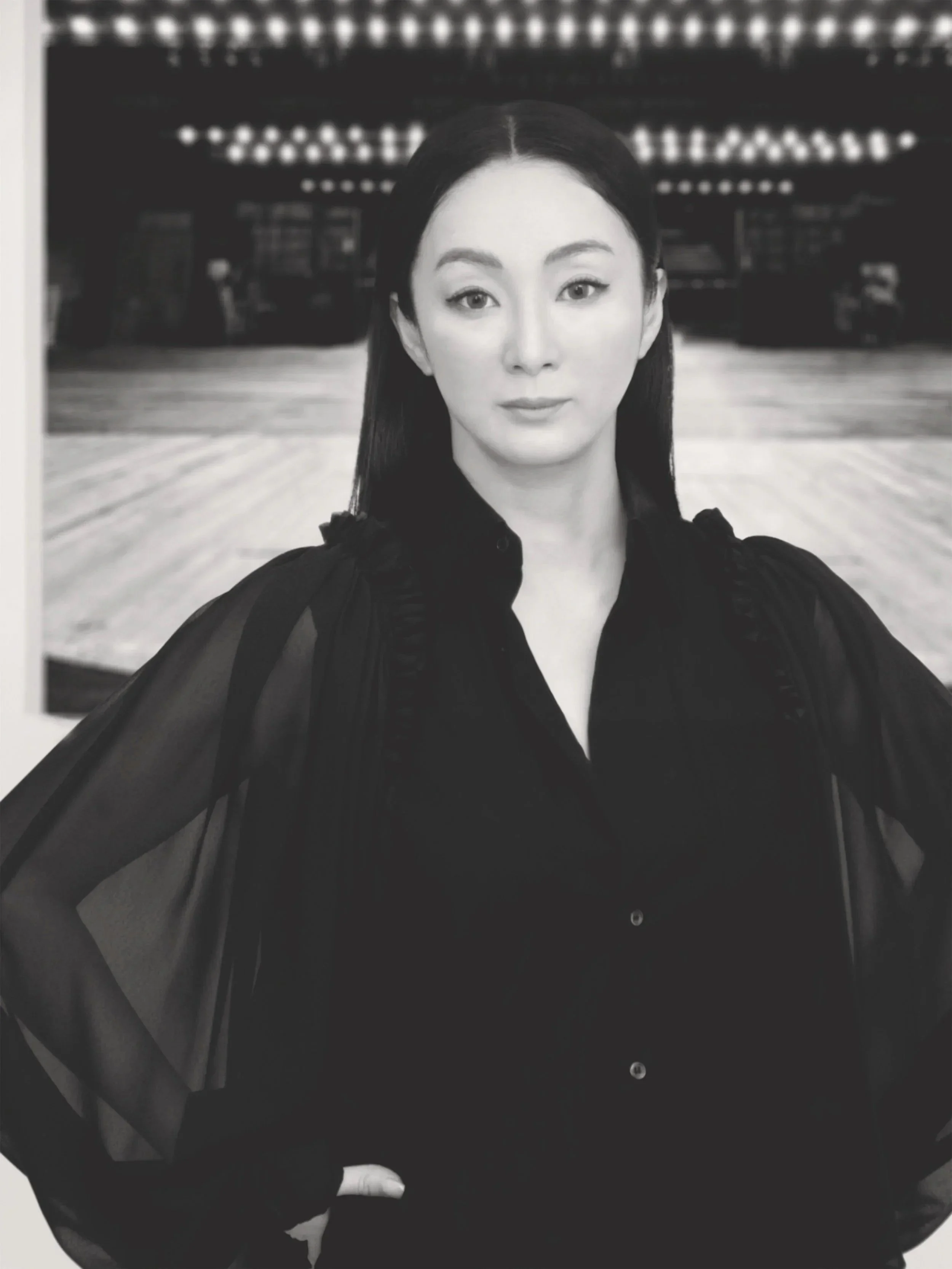
舞踊家・振付師。藤間流勘右衛門派師範。RANSHOU及びRANSHOU Archives & Collection代表。 江戸期の古典・歌舞伎舞踊、特に女形を得意演目とする。舞踊、振付、演出、舞台プロデュース、映像制作、アーカイヴ、歴史研究にわたる横断的な実践を行っている。
4歳から古典舞踊をはじめ、藤田洋(新国立劇場・初代演劇芸術監督、歌舞伎・演劇評論家)の手引きにより、9歳 で藤間藤子が当主をつとめる「代地」に入門した。以後、蘭景に師事する。代地は、藤間流家元・二世藤間勘右衛門 の一番弟子であった藤間勘八、その養女・藤間藤子(人間国宝・重要無形文化財「歌舞伎舞踊」保持者)、その養女・蘭景と江戸時代から続く藤間流の名門。2002年、藤間蘭景より「藤間蘭翔」の名を許されたのち、2009年には師範資格を取得。
近年は、現代における女形のあり方を自身の体験や記憶を通して考察する「現代女形考」を主宰。浮世絵のアーカイヴなど舞踊に関する歴史資料の収集・保全にもつとめる。2025年には、自身が代表をつとめ収集・管理にあたる RANSHOU Archives & CollectionがGoogle Arts & Cultureに参加。資料等の公開のほか、「歌舞伎舞踊・女形」 の歴史エッセイをGoogle Arts & Culture上で公開している。
主な舞台プロデュースとして、横浜美術館で開催されたアートフェア「Tokyo Gendai」のヴェルニサージュでの 『京鹿子娘道成寺』 。 東京藝術大学音楽学部邦楽科卒業。主な受賞歴に「舞踊批評家協会新人賞」(2019)
Ranshou Fujima is a Japanese dancer and choreographer of kabuki-buyō (dance) (歌舞伎舞踊) and particularly excels in onnagata (female forms). She is the director of RANSHOU and the RANSHOU Archives & Collection (see: Google Arts & Culture). Her multidisciplinary practice spans performance, choreography, directing, stage production, film, archival practice, and historical research.
She began training in the classical art at the age of four and started an apprenticeship at the age of nine under the grandmaster Rankei Fujima of the Daichi company led by Fujima Fujiko, the first woman in the field of kabuki to be named a Living National Treasure. Daichi was founded by Kanpachi Fujima as a branch of the Fujima Kan’emon school in the Edo period, the oldest school in kabuki-buyō, and was later inherited by Fujiko and Rankei, her adopted successor in the artistic lineage. Ranshou was granted the stage name “Fujima” by Rankei and the Kan’emon school in 2002, and subsequently, she received her certification as a shihan (grandmaster) in 2009. Onnagata is a type of performance that was first developed by male kabuki actors in the 17th century to portray female characters in theater or dance. Inheriting the spirit and techniques of Rankei Fujima, Ranshou draws on classical onnagata styles.
In more recent project Contemporary Onnagata (female forms), Ranshou expertly draws on traditional techniques and styles of onnagata―including those originated by 18th-century grandmasters like Segawa Kikunojō and Nakamura Tomijūrō―while simultaneously imbuing her performances of classical female characters with contemporary themes. Ranshou’s own personal memories, emotions, places and sense of identity converge in her work, encompassing everything from optimism to sorrow, tenderness to violence, beauty to chaos―a peculiar mix, yet nonetheless true to the artist herself. The objective of such pursuits is to investigate the history of effacement that pervades the treatment of female figures in classical narratives, ultimately allowing Ranshou to render her own feminine beauty.
As one of her major stage productions, Ranshou produced and presented a performance for the vernissage of Tokyo Gendai, an art fair held at the Yokohama Museum of Art. She holds shihan certification from the Fujima Kan’emon school and graduated from the Department of Traditional Japanese Music, Faculty of Music, Tokyo University of the Arts. Her awards include the New Talent Award from the Dance Critics Society of Japan in 2019.
FUTURE HISTORY
Lineage and Form of Onnagata
PAST|1753|2026|BEYOND
歌舞伎舞踊・女形の〈系譜〉と〈型〉
会場 | Venue
国立劇場 大劇場(舞台上および楽屋通路等)
〒102-0092 東京都千代田区隼町4−1(地図)
会期 | Date
2026年9月12日(土)・13日(日) 2日間, 入場無料
September 12 (Sat) - 13 (Sun), 2026; 2 days, Free admission
11:00-18:00 (予定)
主催 | Organizer
RANSHOU
歌舞伎衣裳協力 | Kabuki costume, lent courtesy of
松竹衣裳株式会社
SHOCHIKU COSTUME
企画・キュレーション | Curated by

お問い合わせ | Press
RANSHOU
Mail: info@grape-fruit.org