
展覧会 | Exhibition
国立劇場 大劇場(東京) | National Theatre, Tokyo
舞台上 | On the Stage
F U T U R E H I S T O R Y
歌舞伎舞踊・女形の〈系譜〉と〈型〉
LINEAGE AND FORM OF ONNAGATA
PAST|1753|2026|BEYOND
Curated by RANSHOU
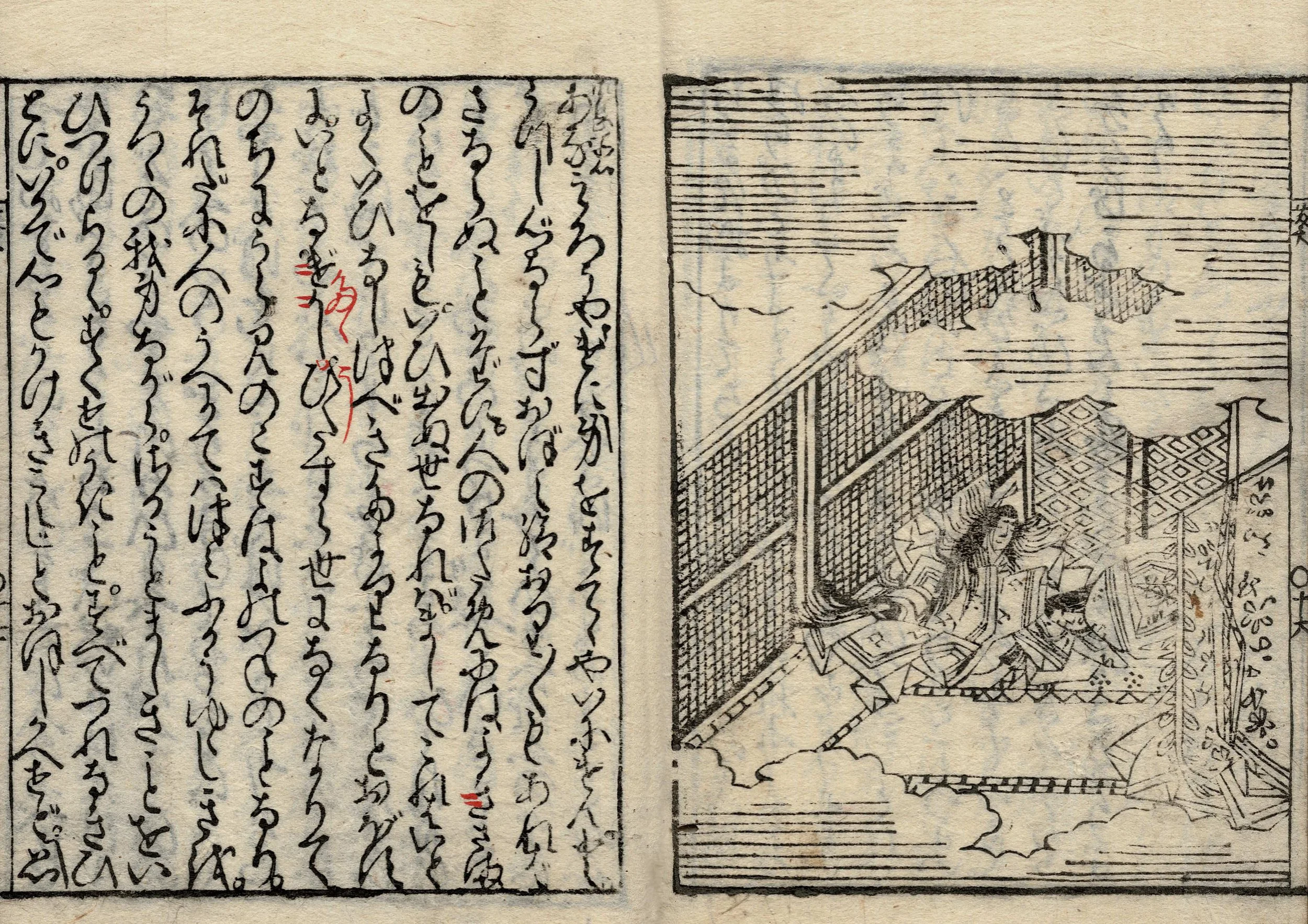
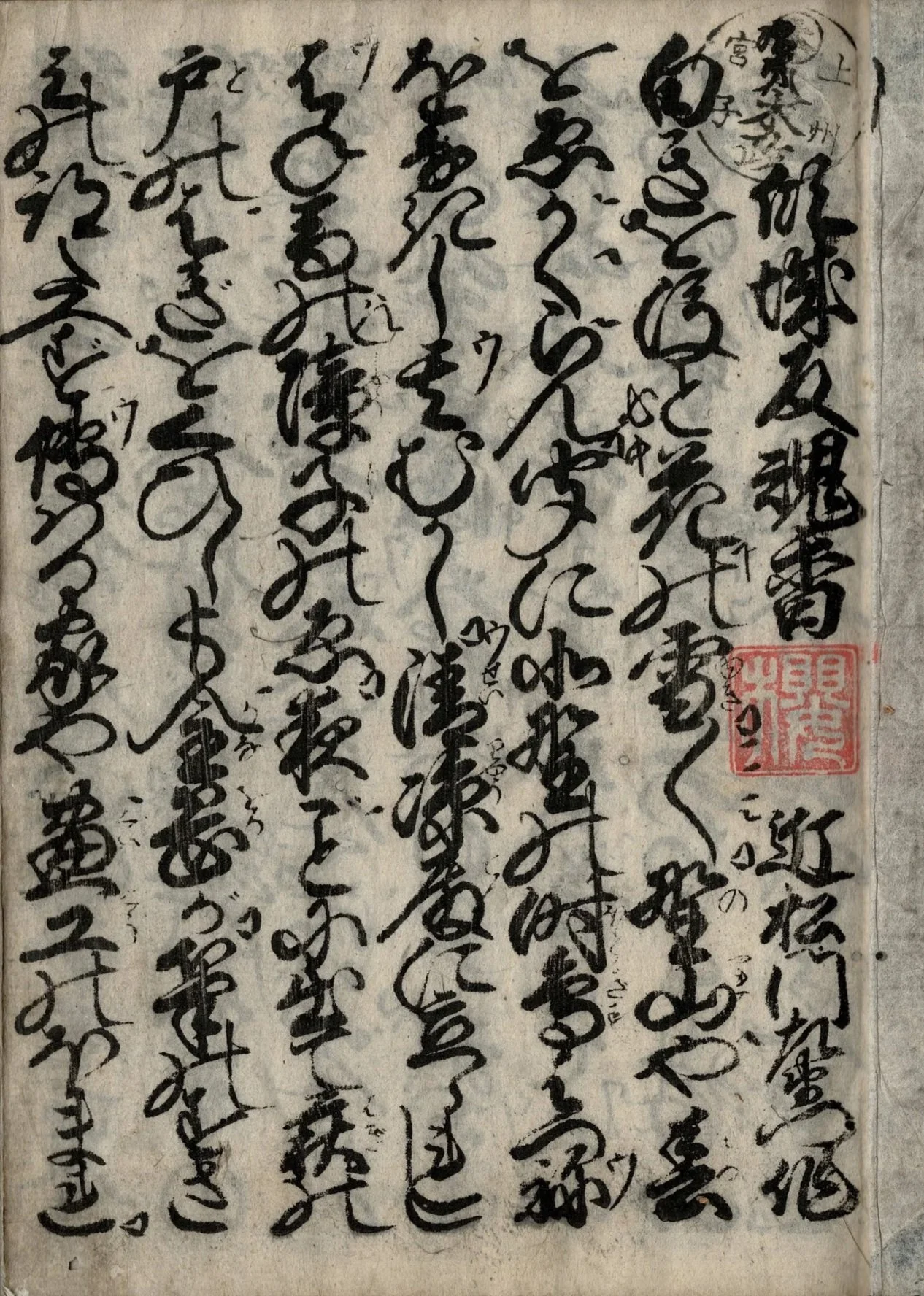
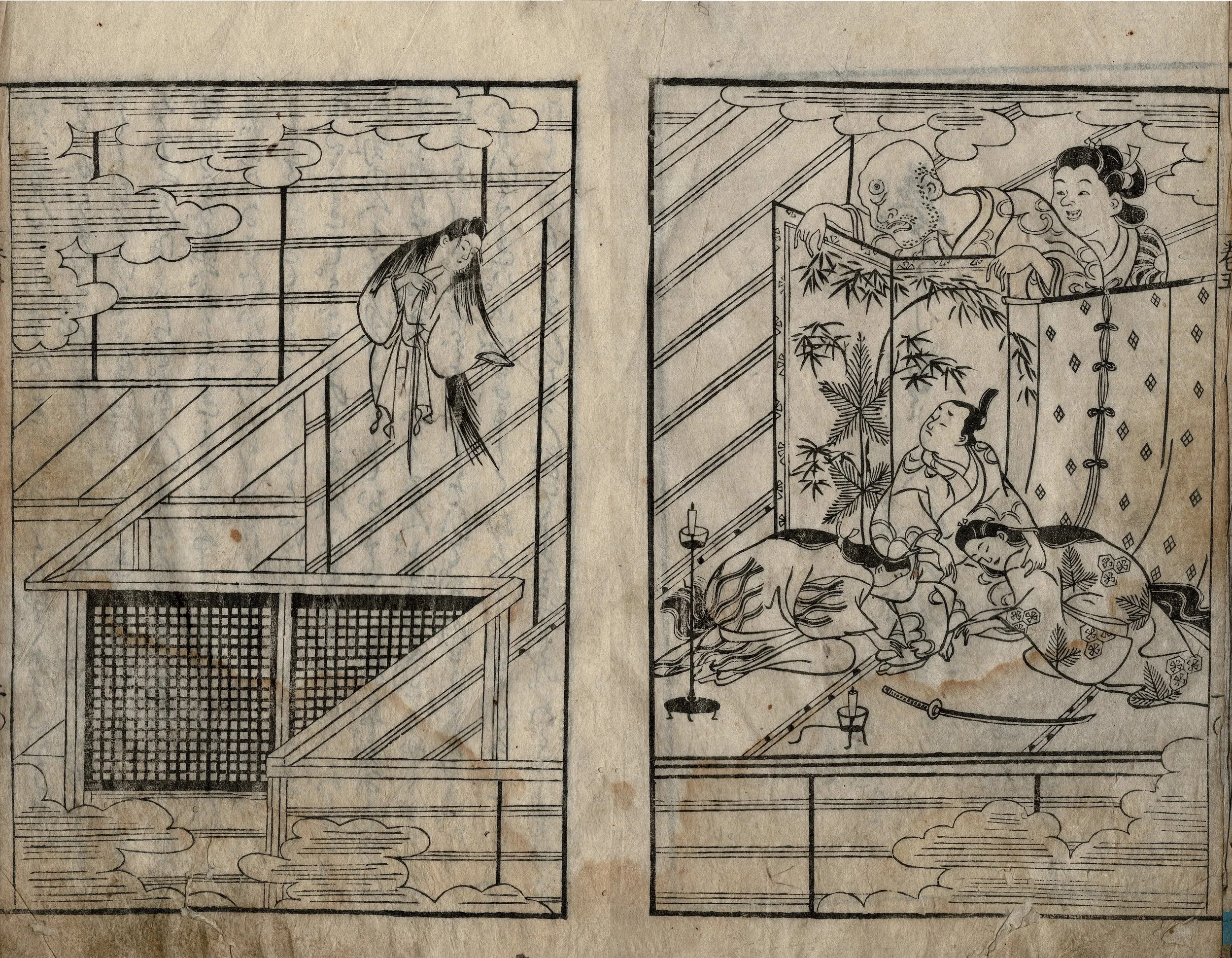
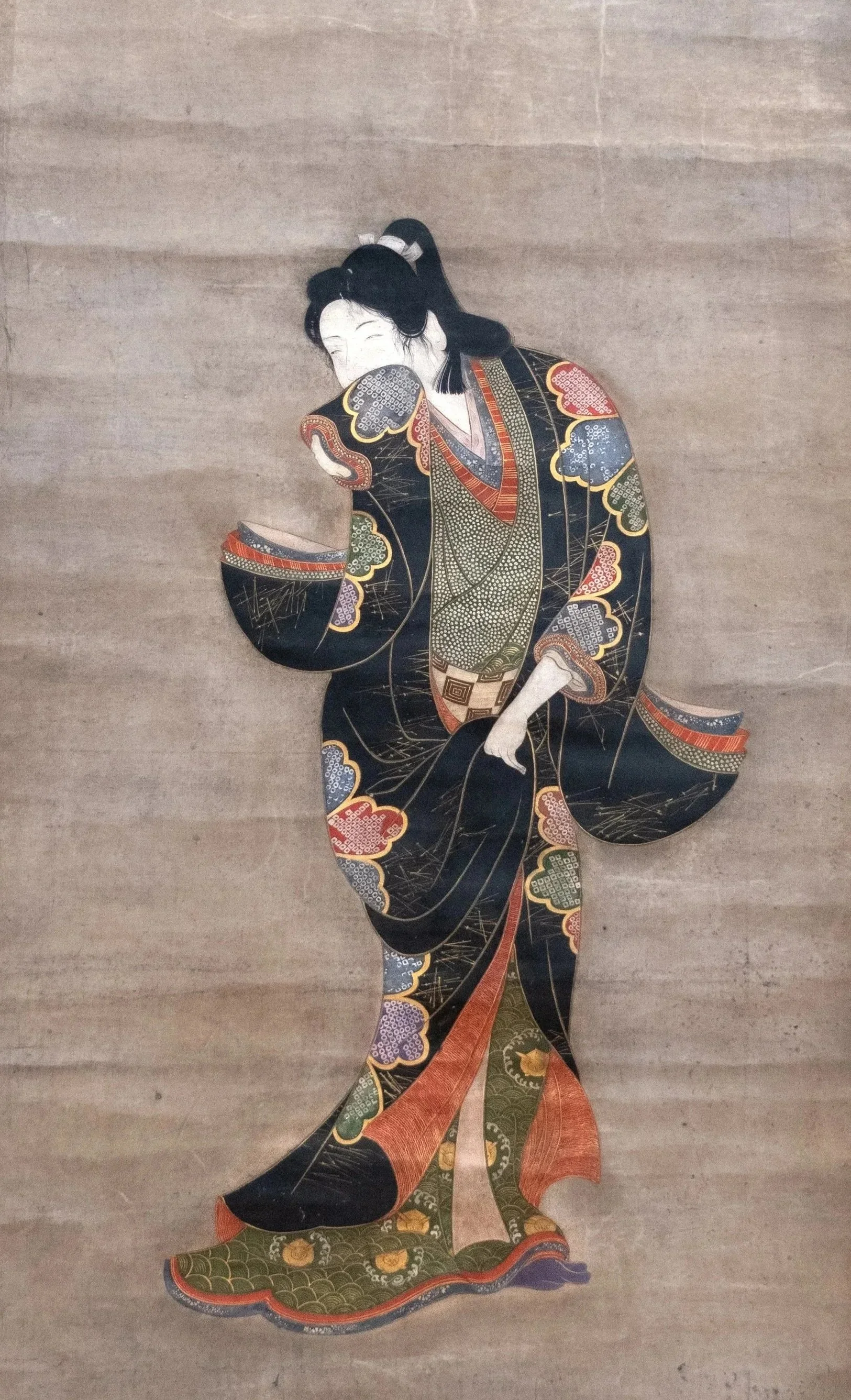
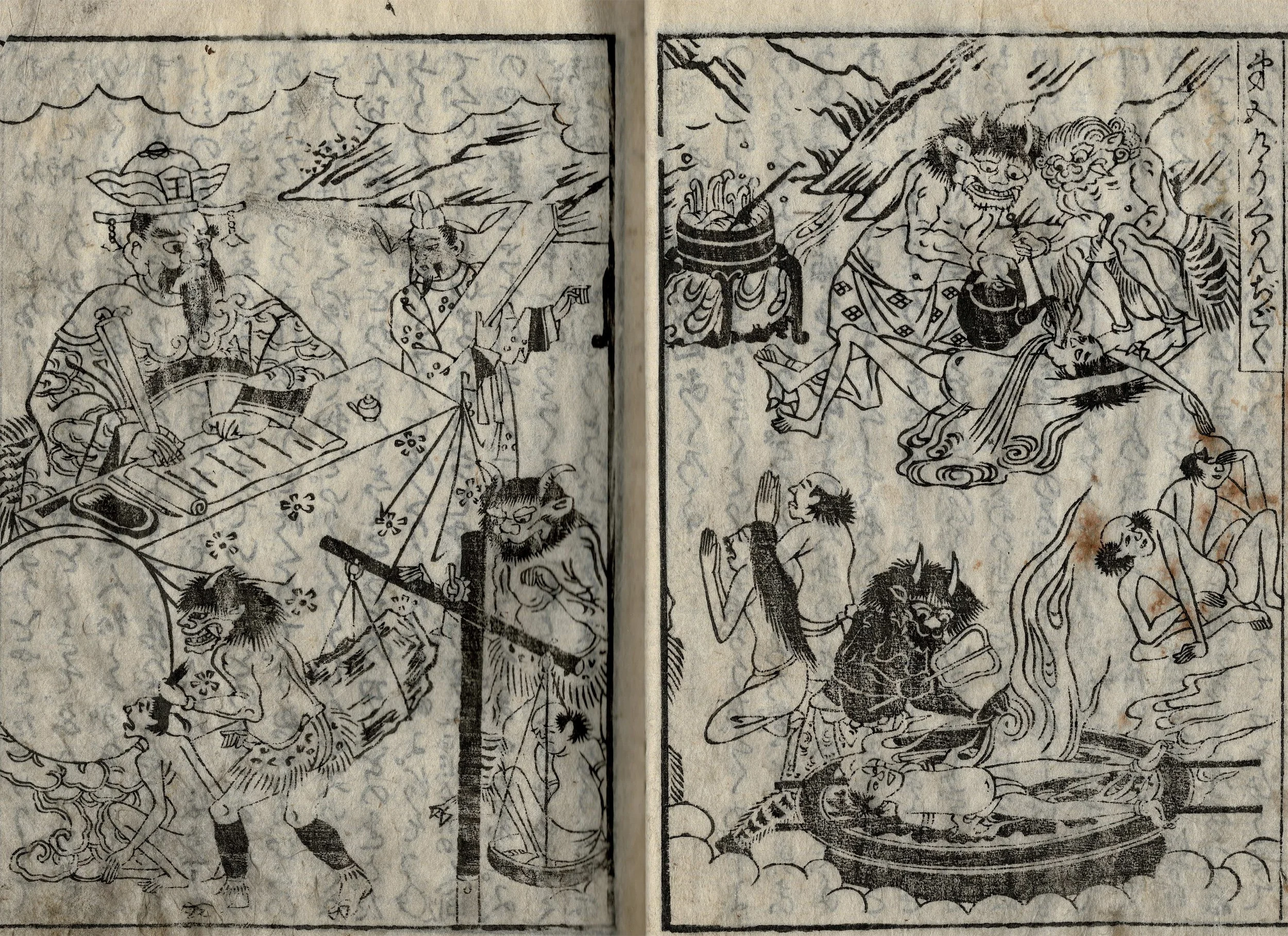
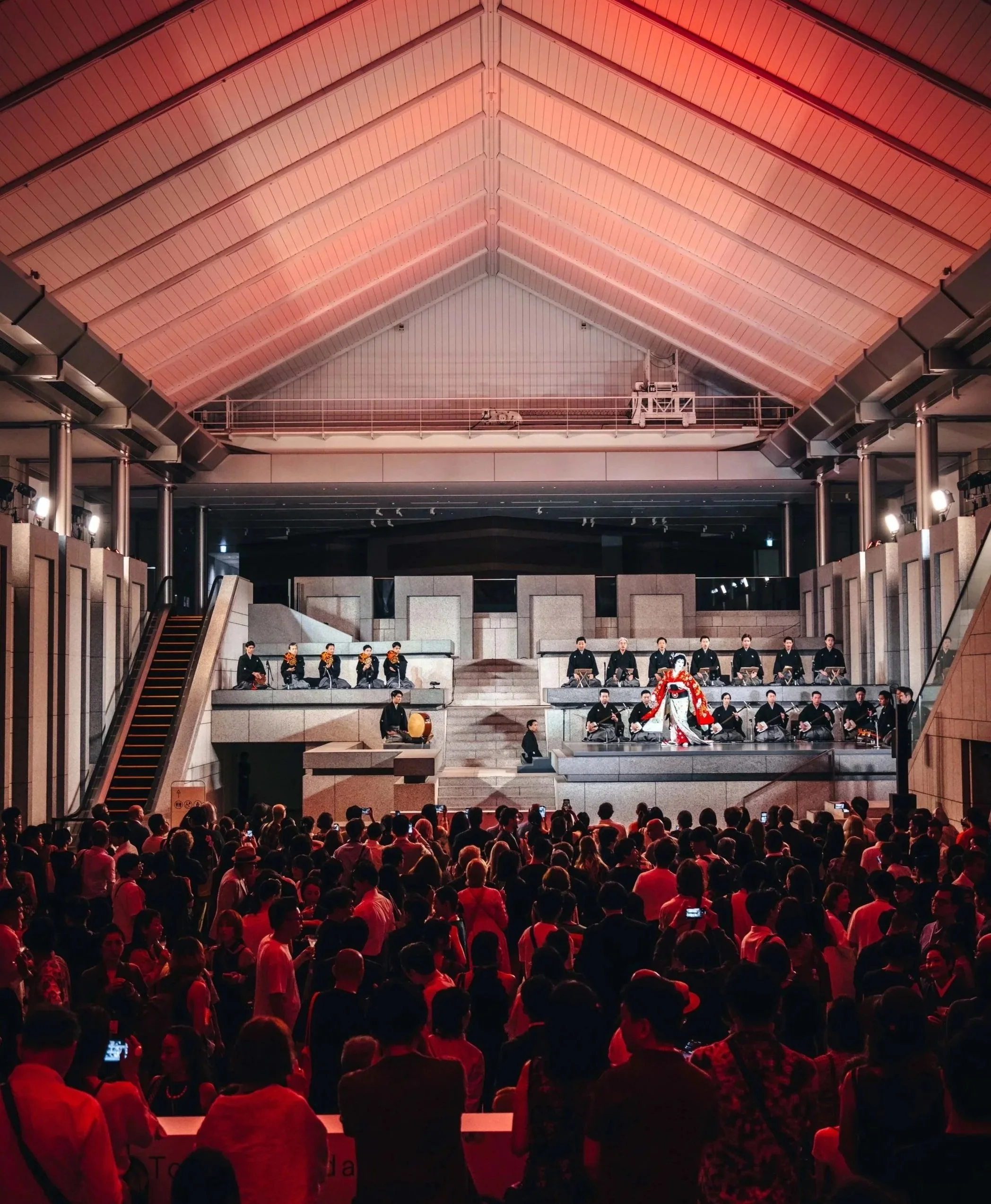
建て替えのため閉場中の「国立劇場」、その大劇場の舞台上で展覧会を開催いたします。
本当は、客席の皆様に向けて、この舞台で踊りたいという気持ちが募るばかりです。現況ではそれは叶わないので、劇場、その歴史への最大限の敬意をもって、できることをしたい、という試みです。
____
閉場中の国立劇場で、女形の最高峰とされる『京鹿子娘道成寺』(1753年、江戸・中村座初演)を中心に、100点以上にのぼる当時の作品・資料を通して、歌舞伎舞踊・女形の成立と継承を支えた思想的・文化的・社会的背景を辿ります(フロアマップ)。
『京鹿子娘道成寺』はこれまで、その題名から、僧〈安珍〉と少女〈清姫〉をめぐる道成寺伝説、すなわち執心と変身の物語を中心に語られることが少なくありませんでした。しかしこの演目は、道成寺伝説のみならず、当時の思想・宗教観、古典文学、伝承・言伝え、演劇表現、そして江戸の世相といった複数の文化的記憶が重なり合う中で成立し、踊り継がれてきたものでもあります。本展では、17世紀以降に刊行された宗教書、物語版本、浮世絵、役者絵、番付、長唄正本、舞台資料などを通して、それらの記憶やイメージがいかに視覚化され、身体の型となり、鮮やかな女形の演目として結晶していったのかを見つめます。
____
平安時代、源信が著した『往生要集』などを通して、地獄と浄土の具体的なイメージは広く形づくられていきました。この世を迷いの場ととらえ、無常、因果、浄土往生への希求などを含む思想・宗教観は、来迎図や六道絵などの仏教美術、さらに『源氏物語』『平家物語』といった物語にも深く刻まれていきます。そうした宗教や物語は、近世以降の江戸の社会において「憂き世」が「浮世」の華やぎと重なり合う過程でも受けとめられ、社会的規範として、ときには反転され、笑いや機知を帯びながら、子供や女性を含むより広い層に共有されていきました。その共有と変容を支えたのが、17世紀以降、商業出版として広く一般に普及した木版印刷による版本であり、演劇もまた重要な場となりました。
これらの結晶の一つとして、本展では『京鹿子娘道成寺』を中心に据えながら、〈舞台と観客〉〈役者と衣裳〉といった劇場空間、女形が扱ってきた〈生と死〉の主題、そして大奥で上演されていた女性による歌舞伎舞踊の歴史にも光をあてます。
____
また本展の特徴の1つとして、そのような古典を過去の遺産としてではなく、今に生きる女性のレンズを通した「2026年9月時点の古典」として提示します。
「古典は、私にとっては常に今だった」。
本展のキュレーターのひとりである舞踊家・藤間蘭翔はそう語ります。一般家庭に女性として生まれながらも、幼少期から専門的に歌舞伎舞踊、とりわけ女形を学び踊ってきた蘭翔にとって、古典は遠い過去のものではなく、同時代の文学、アニメ、映画などと同じように、自身の感覚や身体の近くにあるものでした。その感覚を出発点に、古典の未来を照らし出すことを試みます。
展示作品には、初期浮世絵、鳥居派・勝川派・歌川派による役者絵、古典籍・版本、今日の歌舞伎で使用されている衣裳、そして歴史的資料との対話の中で、藤間蘭翔/RANSHOUが各ジャンルのクリエイターと共に制作した作品群が含まれます。
これらの展示作品の基盤となるRANSHOU Archives & Collectionは、蘭翔本人が10代の頃から、自らの表現の根拠を探る過程で自然に形成されてきた資料群を核とするアーカイブです。Google Arts & Culture のパートナー機関としてオンライン上で一部公開されていますが、本展では更に拡大し、実空間で一挙に公開します。
場所は、建て替えのため閉場中の国立劇場。その大劇場の舞台上で、歌舞伎舞踊・女形の過去・現在そして未来の歴史を見つめます。
会期 | Date
2026年9月12日(土)・13日(日) 2日間
September 12 (Sat) - 13 (Sun), 2026; 2 days
12日:11:00 -18:00 (予定)
13日:11:00 -16:00 *16時でクローズとなります。
会場 | Venue
国立劇場 大劇場(舞台上および楽屋通路等)
東京都千代田区隼町4−1
アクセスはこちら
National Theatre, Tokyo
4-1 Hayabusa-cho, Chiyoda-ku, Tokyo, Japan
(Google Map)
料金 | Admission
無料 Free
お問い合わせ | Press
info@grape-fruit.org
(RANSHOU)
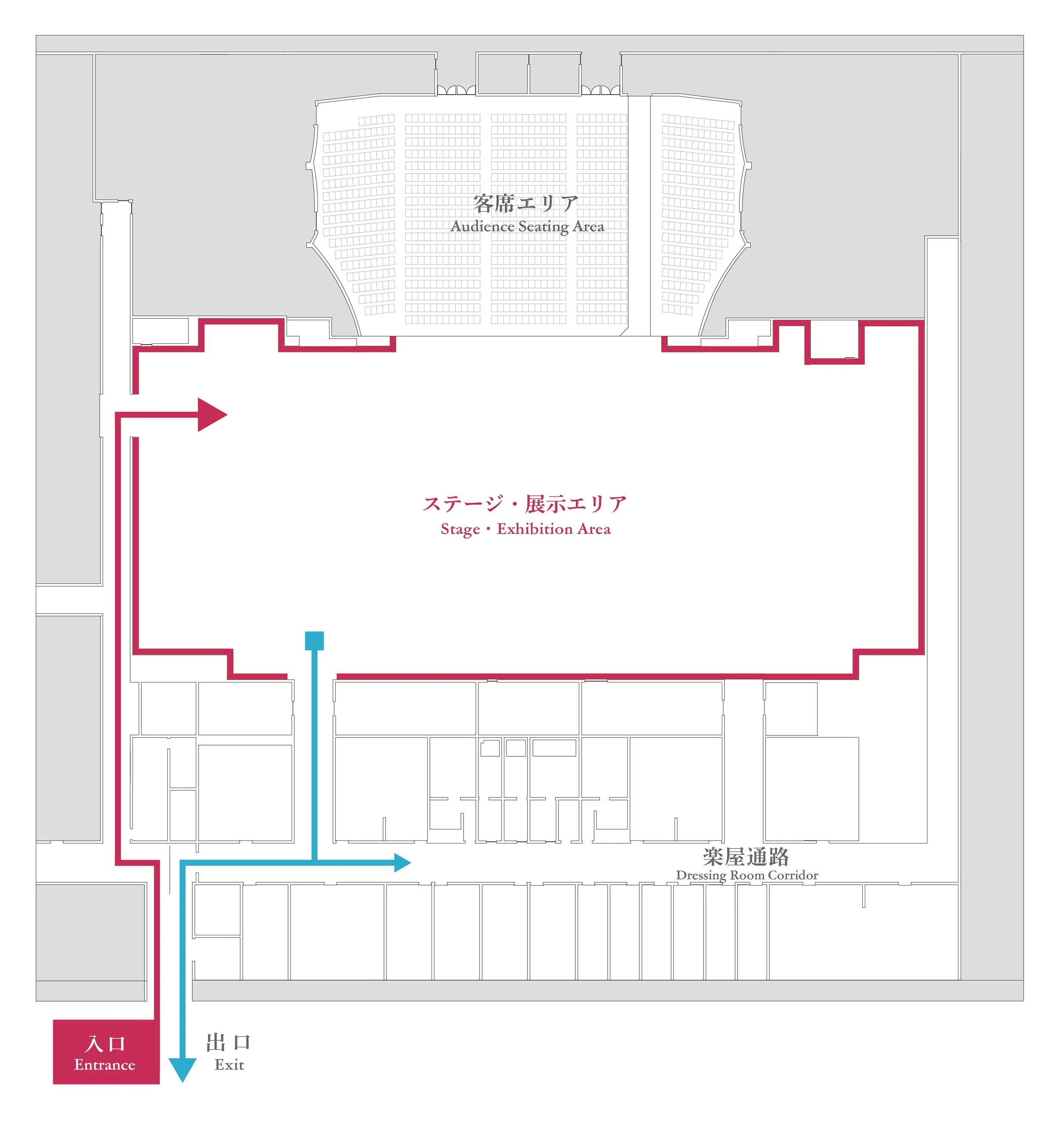
フロアマップ
Overview
Centered on Kyōkanoko Musume Dōjōji — first staged at the Nakamura-za in Edo (present-day Tokyo) in 1753 and long regarded as the pinnacle of the onnagata repertoire — this exhibition traces the intellectual, religious, and social currents that shaped the formation and transmission of kabuki-buyō and the onnagata tradition, drawing on more than one hundred works and primary sources from the period.
Owing to its title, Kyōkanoko Musume Dōjōji has frequently been read through the Dōjōji legend of the monk Anchin and the young woman Kiyohime — a tale of obsession and of serpentine metamorphosis, in which rage and jealousy transfigure Kiyohime into a great serpent. The work, however, did not arise from that legend alone. It took form, and has continued to be performed across generations, at the confluence of multiple cultural memories: the religious thought and worldview of the age, classical literature, oral and folk traditions, theatrical convention, and the social temperament of Edo. Through religious treatises, illustrated literary editions, ukiyo-e prints, actor portraits, playbills, nagauta libretti, and stage materials published from the seventeenth century onward, the exhibition considers how such memories and images were rendered visible, distilled into bodily form (kata), and ultimately crystallized as one of the most luminous works in the onnagata repertoire.
____
During the Heian period, concrete visions of hell and the Pure Land took shape through texts such as Genshin's Ōjōyōshū. A worldview that regarded this life as a realm of delusion — informed by impermanence, karmic causality, and the longing for rebirth in the Pure Land — was inscribed deeply in Buddhist visual culture, including raigō paintings and depictions of the Six Realms, as well as in literary monuments such as The Tale of Genji and The Tale of the Heike. These religious and literary traditions were inherited by the society of early modern Edo even as the sorrowful uki-yo (憂き世), the transient world of suffering, gave way to the resplendent uki-yo (浮世), the floating world of pleasure. They circulated as social norms — and at times in inverted form, infused with humor and wit — and came to be shared broadly, reaching even children. Sustaining this circulation and transformation were the woodblock-printed books that proliferated through commercial publishing from the seventeenth century onward, alongside the theater, which served as another vital site of transmission.
With Kyōkanoko Musume Dōjōji at its core, the exhibition turns extensively to the theatrical space — as visualized in Torii Kiyonaga's degatari scenes and in contemporary depictions of theater interiors — defined by the relationship between stage and audience, and between actor and costume, in which dance technique and dress alike give form to character; and to the themes of life and death that the onnagata has long embodied. A more focused, smaller-scale section is devoted to the history of kabuki-buyō performed within the Ōoku — the inner quarters of Edo Castle — by female actors of kabuki lineage and by women trained as disciples under male kabuki actors, both of whom were granted access to perform within its precincts.
____
A further distinguishing feature of this exhibition is its presentation of the classics not as inherited relics of the past, but as "the classics as of September 2026," viewed through the lens of a woman living today.
"For me, the classics have always been the present."
So observes the dancer Ranshou Fujima, one of the exhibition's curators. Though born into an ordinary household rather than a kabuki bloodline, Ranshou has nonetheless trained in kabuki-buyō — and in the onnagata role in particular — since early childhood under Rankei Fujima, the grandmaster of kabuki choreography, and has performed in the tradition ever since.
For her, the classics have never been distant artifacts; they have stood as close to her senses and body as the contemporary literature, manga and animation, and cinema of her own time. Taking that intimacy as its point of departure, the exhibition seeks to illuminate the future of the classical tradition.
The works on view include early ukiyo-e; actor prints by the Torii, Katsukawa, and Utagawa schools; classical texts and woodblock-printed editions; costumes in use on the kabuki stage today; and a body of new work created by Ranshou Fujima / RANSHOU in collaboration with creators across disciplines, in sustained dialogue with the historical material.
The foundation of these holdings is the RANSHOU Archives & Collection — an archive built around materials that Ranshou began gathering organically in her teens, as she sought the grounds of her own existence and artistic expression. Portions of the collection are already accessible online as a partner institution of Google Arts & Culture; for this exhibition, the archive is expanded and presented in its fullest physical form to date.
The venue is the National Theatre of Japan, currently closed for reconstruction. Upon the stage of its Main Theatre, the exhibition contemplates the past, present, and future of kabuki-buyō and the onnagata.
FUTURE HISTORY
Lineage and Form of Onnagata
PAST|1753|2026|BEYOND
歌舞伎舞踊・女形の〈系譜〉と〈型〉
会場 | Venue
国立劇場 大劇場
東京都千代田区隼町4−1(地図)
National Theatre, Tokyo
4-1 Hayabusa-cho, Chiyoda-ku, Tokyo, Japan (Google Map)
会期 | Date
2026年9月12日(土)・13日(日) 2日間, 入場無料
September 12 (Sat) - 13 (Sun), 2026; 2 days, Free admission
12日:11:00 -18:00 (予定)
13日:11:00 -16:00 *16時でクローズとなります。
主催 | Organizer
RANSHOU
歌舞伎衣裳協力 | Kabuki costume, lent courtesy of
松竹衣裳株式会社
SHOCHIKU COSTUME
企画・キュレーション | Curated by

※ 安全の確保のため、主催者・施設管理者の裁量により入場が制限される場合があります。施設等の状況等にご理解のうえ、予めご了承のうえご来場ください。
※ 劇場内では、主催者・施設管理者の誘導・指示にしたがってください。ご来場者様の故意又は過失により劇場内の設備、機械、装置、工具等を汚損、損傷又は滅失等した場合、 修理・取替に必要な費用等を負担をお願いする場合があります。
※ 他のご来場者様にも十分なご配慮をお願い致します。他の来場者様の迷惑になり得る行為はお控えください。
※ 事故・トラブル、その他の本展覧会に起因又は関連して、ご来場者様が生命、身体又は財産上の損害を被った場合、当該損害についてはご来場者様自身が負担し、主催者・施設管理者は一切の責任を負わないものとします。ただし、当該損害の発生について、主催者に故意又は重過失が存在する場合はこの限りではありません。
※ 上記の違反その他主催者が必要と判断した場合には、その裁量で、当該ご来場者様には途中でご退席ご退場いただくこと、本展覧会を中止・中断すること、警察や関係機関へ通報すること、その他主催者が必要と判断した一切の措置をとることがあります。予めご理解のうえご了承ください。
(Top images)Eshinsouzu Genshin, Eiri Ōjō yōsh (Essentials of Salvation), Woodblock-printed book, Edo period, 1689 edition (1790 reprint)
Untitled I (about time and space), 2024. Kyokanoko Musume Dōjōji, produced and performed by Ranshou Fujima, Yokohama Museum of Art. Photographer: RK. 1456 x 1031mm, Inkjet print, face-mounted to acrylic. Courtesy of Tokyo Gendai
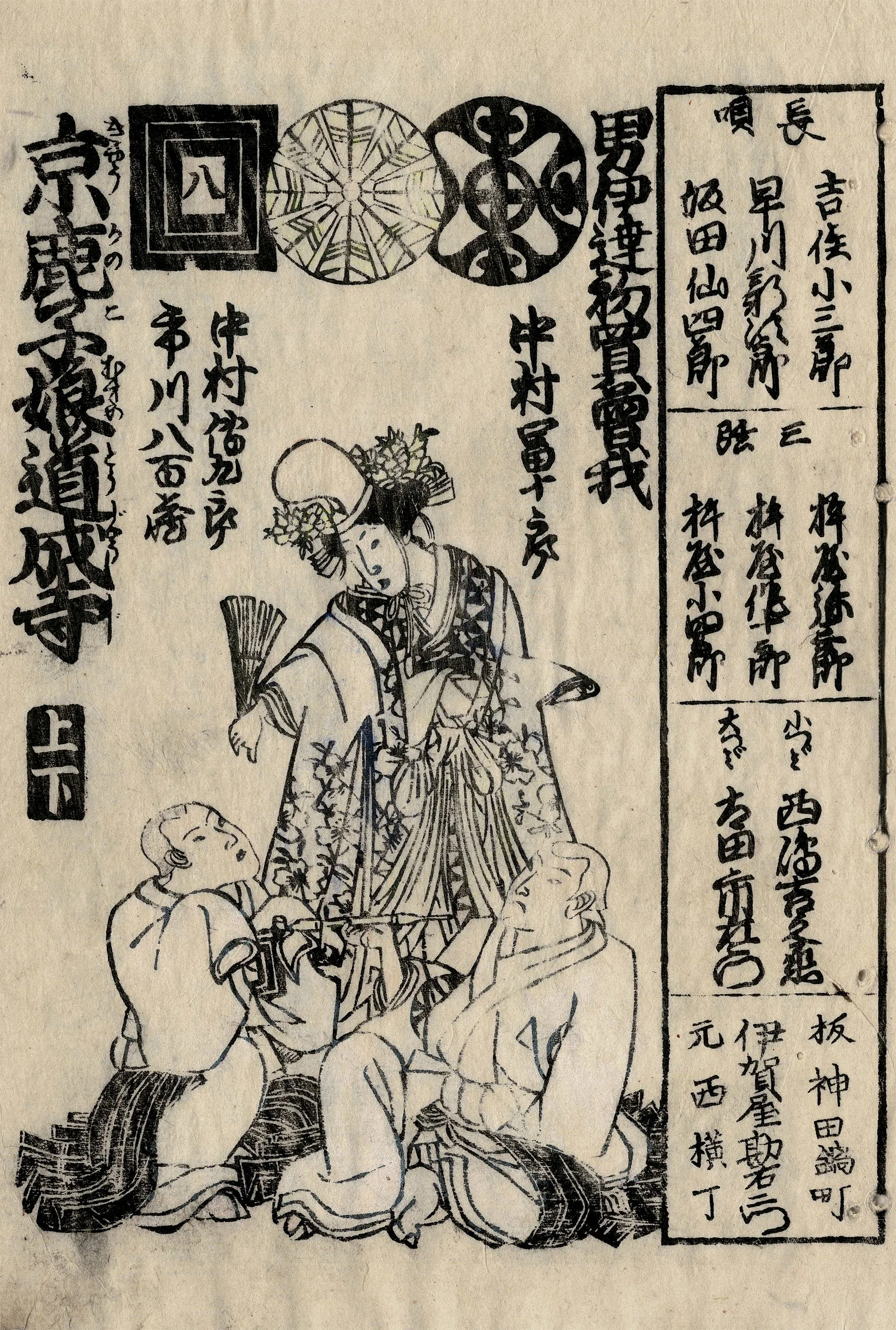
Nagauta shōhon (libretto): Kyokanoko Musume Dōjōji —Cover: Actor Nakamura Tomijūrō I as Yokobue, a young girl, at the
Nakamura-za Theatre, Woodblock print, Edo period, 1753
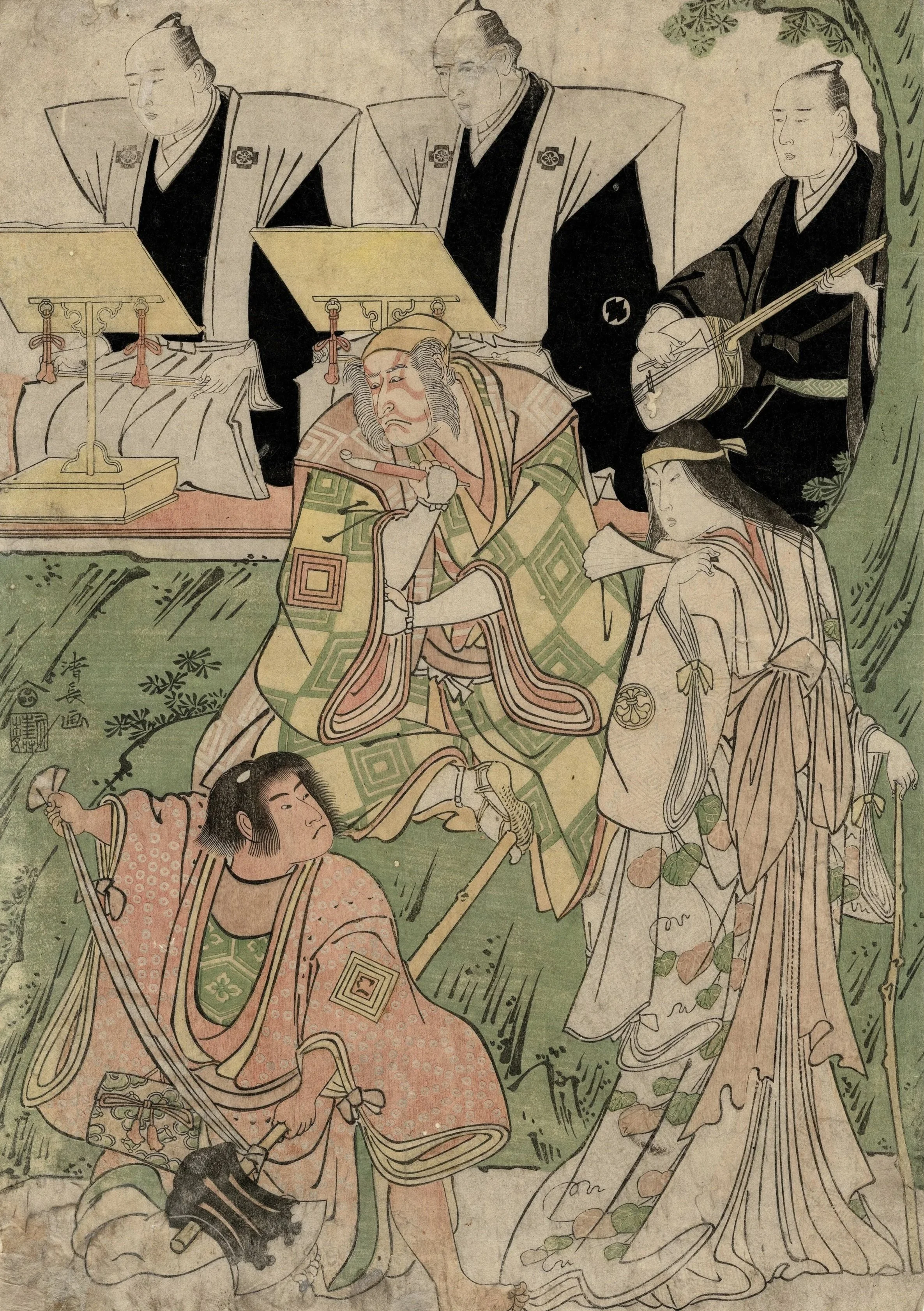
Torii Kiyonaga; Degatarizu, Actor Segawa Kikunojō III as Yama'uba, Ichikawa Monnosuke II as Kaidōmaru, and Ichikawa Danjūrō V as Ninnaji Saibei; with chanters Tokiwazu Kanetayū etc.; from the kabuki play Shitennō Ōeyama-iri (Edo Kiri-za theatre); Edo period, 1785
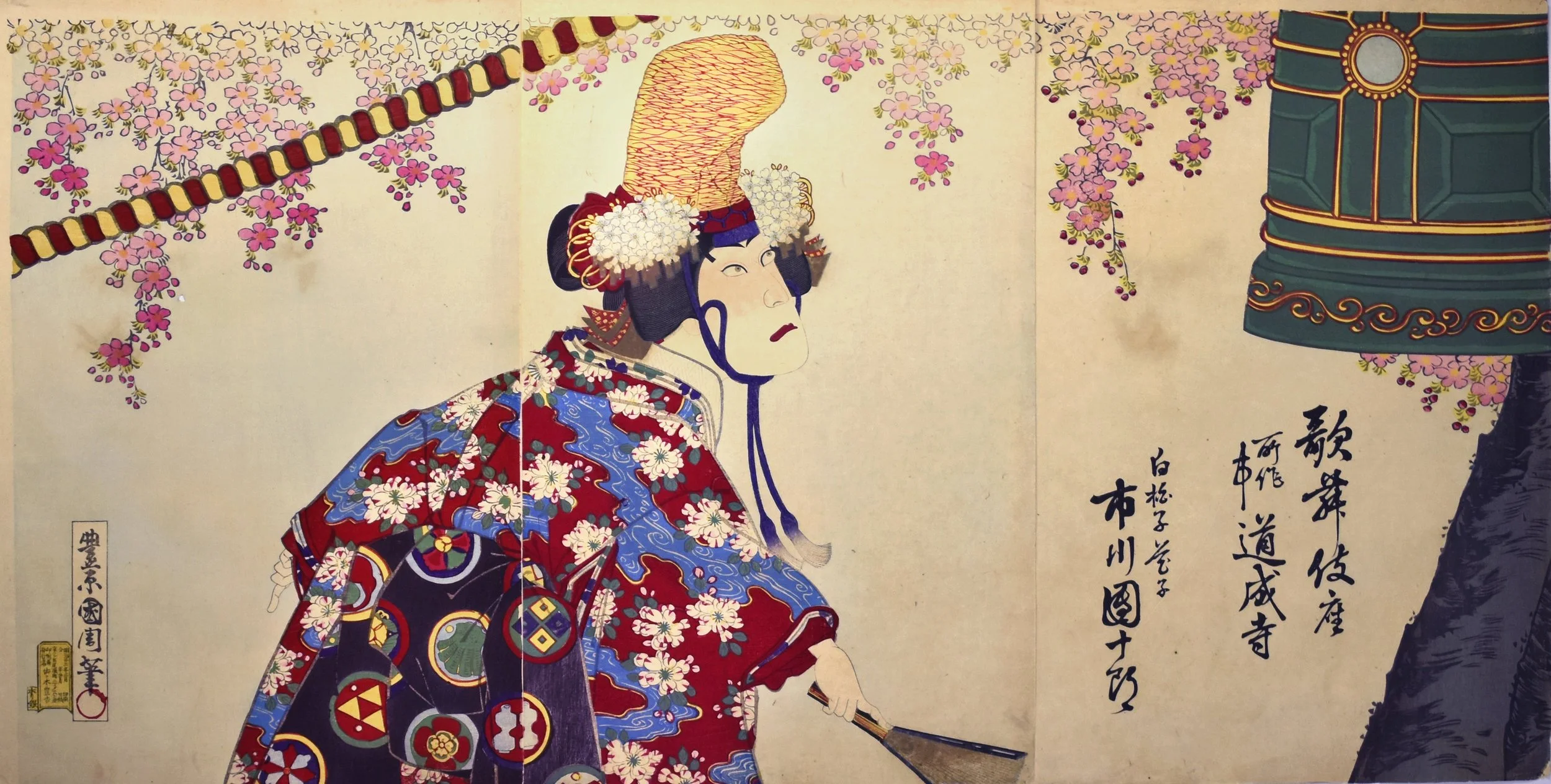
Toyohara Kunichika, Ichikawa Danjūrō IX in Kyokanoko Musume Dōjōji, 1890
Eiri Genji Monogatari (Illustrated book of the Tale of Genji), late 17th century
Chikamatsu Monzaemon, Keisei Hangonkō (The Spirit-Returning Incense), Woodblock-printed book, Edo period, 1708
Okumura Masakobu, Wakakusa Genji Monogatari (Wakakusa Tale of Genji), Edo period, 1707
Kanbun Bijin-zu (Beauty of the Kanbun Era); Hanging scroll; ink, color and gold on paper; Edo period, 17th century